Skip to content

Research & Publications

Academic research, articles and thought leadership

Andre's writing applies accident-investigation research and underwriting experience to the questions pilots, operators, insurers and lawyers actually face. Full articles are published here only where he holds the rights; otherwise a summary and a link to the publisher are provided.

Academic research · Cranfield University

A Comparative Analysis of General Aviation Crash Data of the United Kingdom and South Africa

MSc Safety and Accident Investigation · School of Aerospace, Transport and Manufacturing · February 2021 · Supervisor: Dr Leigh Dunn

Objective. To test whether a data-driven, in-depth statistical assessment of official accident reports could identify ways to improve general aviation safety beyond the individual safety recommendations each report contains.

Method. Mixed methods. 983 publicly available field-investigation reports (UK n=493, SA n=490) were coded for pilot age, licence type, total and recent flight time, aircraft type, phase of flight, CICTT occurrence category and injury severity; hypotheses were tested statistically. A pilot survey administered via social media tested pilots' perceptions of the findings, and structured interviews with pilots, instructors, engineers and student pilots explored areas of interest in depth.

Findings. Correlations in accident causation, training accidents and phase of flight between the two countries; significantly more powerplant-failure occurrences in South Africa; adverse trends between injury severity and pilot age, total experience and recent experience, with low-recency and lower-total-time pilots suffering more severe injuries; and a statistically higher likelihood of fatal injury for pilots aged 51 and older, despite identical licence revalidation requirements for all ages. Loss of control in flight was the dominant fatal occurrence category.

Application. These findings inform Andre's aviation risk assessment models, the recency-weighted approach to pilot experience in underwriting, and Andre's writing on loss of control and the "impossible turn".

© Cranfield University 2021. The thesis is made available for personal and academic reference with the author's permission; no part may be reproduced without the written permission of the copyright owner.
983
accident reports analysed
2
countries compared
3
methods: data, survey, interviews
LOC-I
dominant fatal category
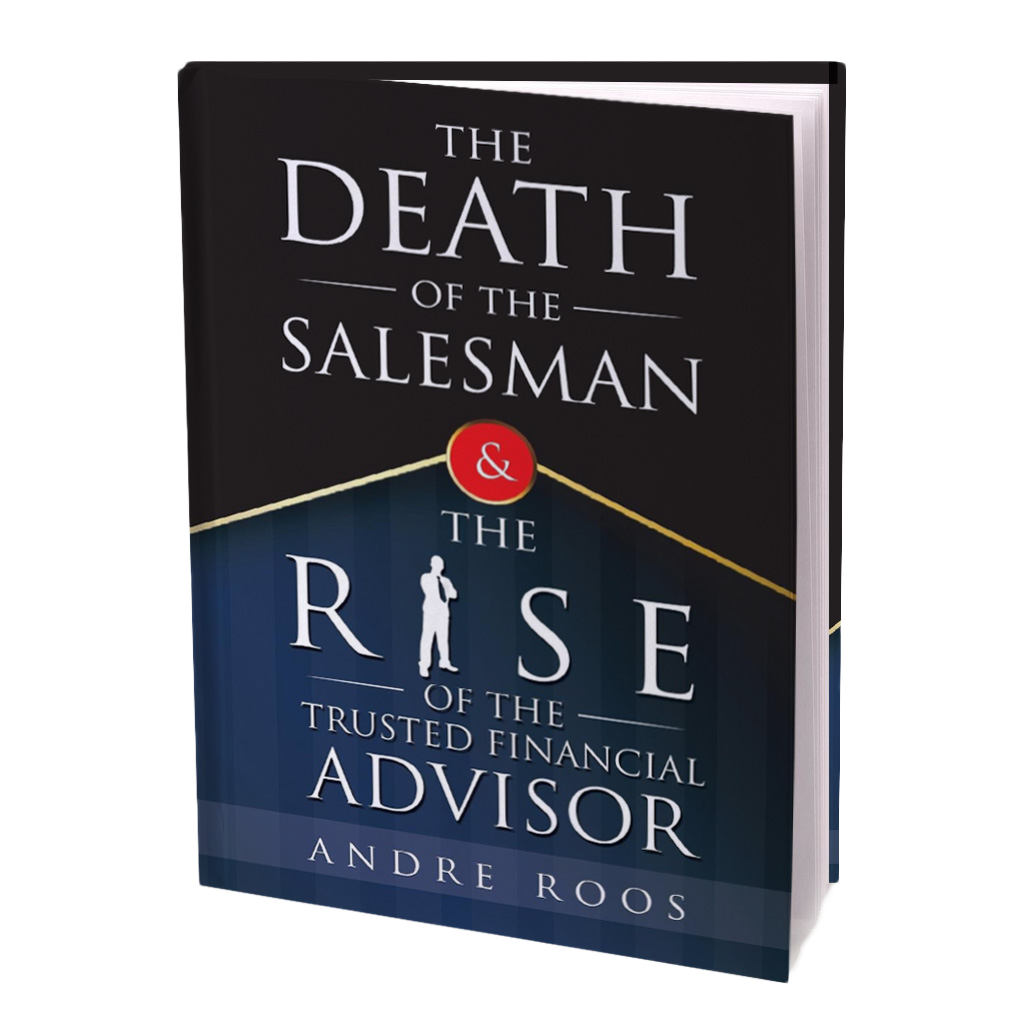
Cover of The Death of the Salesman and the Rise of the Trusted Financial Advisor

Book · 2018

The Death of the Salesman and the Rise of the Trusted Financial Advisor

AuthorHouse, 2018 · ISBN 978-1-5462-8865-7

Andre's first book, written from his years advising pilots and aircrew on life and disability cover. Its argument is that trust, not technique, is what sustains a professional practice: the adviser's job is to tell clients what they need to hear, build a long-term relationship and become a valued consultant rather than a seller of policies. Reviewed by Foreword Clarion Reviews (July 2018). Paperback and audiobook. ISBN 978-1-5462-8865-7.

Library

Publications & Insights

18 items

Article April 2026

Insurance That Does Not Wait for the Accident

SkyGuard Insights (skyguardglobal.com)

Argues that traditional aviation insurance — assess once, price, wait for the claim — was designed for a world of limited visibility, whereas flight data now makes risk observable while operations are under way. Proposes continuous telemetry monitoring with premiums that adjust within set limits according to how the aircraft is actually flown, plus feedback to operators on their own performance. Positions insurance as an active part of the safety system rather than a passive safety net.

Aviation InsuranceTechnology and Innovation
Commentary March 2026

When Safety Reports Stop Reaching the Right People

LinkedIn (post)

Short-form post: the problem in most aviation organisations is not a lack of safety data but whether operational insight reaches executive decision-makers. Safety reports get contained in reporting systems and never integrated into leadership oversight — a structural issue of information architecture rather than commitment to safety.

Risk Management
Commentary March 2026

The Illusion of Control in Modern Aviation

LinkedIn (post)

Short-form post: more dashboards and data streams can create a sense of oversight while operational fragility quietly increases. Real visibility comes from understanding how information flows through the organisation and whether those responsible for risk actually see the signals that matter. Operational risk is strategic, not purely technical.

Risk Management
Article March 2026

When More Data Doesn't Mean Better Decisions

SkyGuard Insights (skyguardglobal.com)

Long-form adaptation of the World Airnews interview for the SkyGuard site: the real challenge in aviation is interpreting data in context and converting risk detection into action. Covers information overload, normalised risk, alert fatigue, competing commercial priorities and unclear intervention paths, and argues for filtering, prioritisation and tiered, accountable alerts rather than less data. Promoted by Roos on LinkedIn on 24 and 26 March 2026.

Flight Data MonitoringTechnology and Innovation
Commentary February 2026

Automation Is a Tool. Human Judgement Is the Authority.

LinkedIn (post)

Short-form post (re-posted 4 March 2026): automation has made aviation safer but introduces the quieter risk of eroding human judgement, first in the cockpit and now at organisational level as predictive systems flag and score risk. Warns that systems built on historical data cannot handle the genuinely new, so technology must support rather than replace human decision-making. Drawn from the World Airnews February 2026 interview.

Human FactorsAviation Safety
Commentary February 2026

How Normalisation of Deviance Creeps In

LinkedIn (post)

Short-form post explaining how risk enters operations gradually: small deviations become routine because nothing goes wrong, margins erode and the operation drifts toward the edge. Argues that recalibrating 'normal' is hardest when nothing has yet failed, which is why near-miss and trend data matter. Drawn from the World Airnews February 2026 interview.

Risk Management
Commentary February 2026

Identifying Risk Is Not the Same as Managing It

LinkedIn (post)

Short-form post: most organisations are good at identifying risk but far fewer act on it. Lists the reasons action stalls — the 'it hasn't hurt us yet' mindset, alert fatigue, commercial pressure and not knowing the next step — and argues that risk intelligence must be paired with a recommendation, ownership and a timeframe. Drawn from the World Airnews February 2026 interview.

Risk Management
Article February 2026

Information Overload Is a Human Factors Problem

LinkedIn (article)

Contends that when safety systems fail the cause is usually human, not technological: beyond a certain point additional data degrades decision-making through freezing, attention narrowing and false confidence. Uses Eastern Air Lines 401 as the archetype of a crew fixating on one cue. Prescribes triage and clear green/amber/red categorisation so the primary message is obvious immediately — the right alert, to the right person, at the right moment.

Human FactorsAviation Safety
Article February 2026

When More Data Doesn't Make Aviation Safer

LinkedIn (article)

Argues that data only becomes useful when it reveals something you could not otherwise see, using SkyGuard's fleet-wide comparison (a 2.3 G turn at 800 ft against a fleet norm below 1.5 G) to show how context turns a number into an outlier. Warns that operators buried under thousands of FDM parameters disengage, and distinguishes information from intelligence. SkyGuard's reports therefore focus on SOP deviations, divergence from fleet norms and which of those are linked to real risk. Adapted from the World Airnews February 2026 interview.

Flight Data MonitoringTechnology and Innovation
Interview February 2026

Human Factor: Operational Blind Spot — When more data doesn't automatically mean better decisions (interview)

World Airnews

Six-page, sixteen-question interview by Judi Rodokanakis with Andre Roos of SkyGuard Global on how real-time flight data and predictive risk tools interact with human judgement, organisational culture and decision-making. Roos argues that information overload is a human-factors trap, that identified risk is pointless without an intervention pathway, that automation must remain a tool while human judgement stays the authority, and that leadership culture determines whether risk data makes anyone safer. Source text for his February–March 2026 LinkedIn articles and posts and the SkyGuard Insights post of 17 March 2026.

Expert CommentaryFlight Data MonitoringHuman Factors
News release January 2026

SkyGuard Global: Nine Years in the Making, Ready to Redefine Aviation Insurance

World Airnews

Launch feature announcing SkyGuard Global as both a next-generation aviation hull and liability insurer and an aircrew life insurer, built on Flight Data Monitoring, AI analytics and actuarial modelling with Pay-As-You-Fly / Pay-How-You-Fly pricing. Profiles Andre Roos as founder and CEO alongside chairman John McIlraith, chief actuary Ronald Richman and a reinsurance panel including Hannover Re. Published without a byline from SkyGuard's own news release.

Aviation InsuranceTechnology and Innovation
Article December 2025

"Dead Leg, Wrong Engine": How Fight–Flight–Freeze Turns a Manageable Failure into a Fatal One

World Airnews

Written from the perspective of an accident investigator (Roos notes he holds no multi-engine rating), the article uses his Cranfield accident-simulation week and the Kegworth, TransAsia 235, Transair 810 and BAC One-Eleven cases to show how startle leads crews to misidentify and shut down the good engine. Distils a kneeboard EFATO script — Identify, Verify, Confirm, Execute — and argues that training by design excludes the FFF response that causes the real-world errors. Manuscript title: 'Dead Foot, Wrong Engine'.

Accident InvestigationHuman Factors
Article November 2025

Spatial Disorientation and the Freeze Factor: Why Pilots Fly Perfectly Good Aircraft Into the Ground

World Airnews

Written after three fatal loss-of-control accidents in South African weather, explains what happens when a VFR pilot enters IMC: the vestibular system and the eyes send conflicting signals and the brain defaults to false sensations. Describes the classic illusions and shows how fight, flight and freeze each make disorientation deadly, with case studies including Colgan 3407 and Eastern 401. Concludes that an instrument rating is training the body to distrust its sensors and trust the instruments.

Human FactorsAviation Safety
Article October 2025

The "Impossible Turn": How Fight–Flight–Freeze (FFF) Makes a Bad Bet Worse

World Airnews

Examines why pilots attempt the low-altitude turnback after an engine failure on take-off, arguing that the stress response pushes pilots toward the manoeuvre and that online turnback experiments are flawed because none are flown under a real adrenal dump. Reviews FAA guidance and accident data, citing his Cranfield thesis finding of roughly 80% fatality in stall/spin turnbacks. Offers a pre-briefed EFATO script: Speed, Field, Fault, Flaps, Final.

Aviation SafetyHuman Factors
Article September 2025

The Fight, Flight, or Freeze Response in Aviation Emergencies: Why All Three Are Dangerous for Pilots

World Airnews

Opens with Roos's own in-flight engine failure at 1,300 ft and uses it to explain the adrenal surge behind the fight, flight or freeze response. Walks through the physiology (tunnel vision, auditory exclusion, loss of fine motor control) and shows why each reaction is dangerous in a cockpit. Closes with countermeasures: stress inoculation, visualisation, checklist discipline and CRM. First of a four-part series.

Human FactorsAviation Safety
Video March 2022

Engine Failure at 1300ft AGL, Morningstar ZA, Pioneer 300

YouTube — Just Plane Adventures

Cockpit video of Roos's real engine failure (blocked carburettor main jet) shortly after departure from Morningstar, Cape Town, with his sister on her first flight as passenger, ending in a safe landing. 1.87 million views as at October 2026. The event is the opening anecdote of his September 2025 World Airnews article and he shared the video on LinkedIn on 23 March 2022.

Aviation SafetyHuman Factors
Research February 2021

A Comparative Analysis of General Aviation Crash Data of the United Kingdom and South Africa

Cranfield University — MSc thesis, Safety and Accident Investigation

Mixed-methods analysis of 983 official field-investigation reports into general aviation accidents in the UK and South Africa, combined with a pilot survey and structured interviews. Identified correlations between pilot age, total and recent experience, licence type, phase of flight and injury severity, and a significantly higher rate of powerplant-related occurrences in South Africa.

Accident InvestigationAviation SafetyRisk ManagementHuman Factors
Book 2018

The Death of the Salesman and the Rise of the Trusted Financial Advisor

AuthorHouse (book)

Andre's first book, written from his years advising pilots and aircrew on life and disability cover. Its argument is that trust, not technique, is what sustains a professional practice: the adviser's job is to tell clients what they need to hear, build a long-term relationship and become a valued consultant rather than a seller of policies. Reviewed by Foreword Clarion Reviews (July 2018). Paperback and audiobook. ISBN 978-1-5462-8865-7.

Expert Commentary

Bibliographic details (issue, page numbers, publication dates) are shown where confirmed with the publisher. Titles marked as forthcoming or under verification are listed from the author's manuscripts and will be updated on confirmation.

Media, reprint or research enquiries

Enquiries are treated in confidence. Initial consultations establish scope, independence and conflicts before any engagement.